.svg)
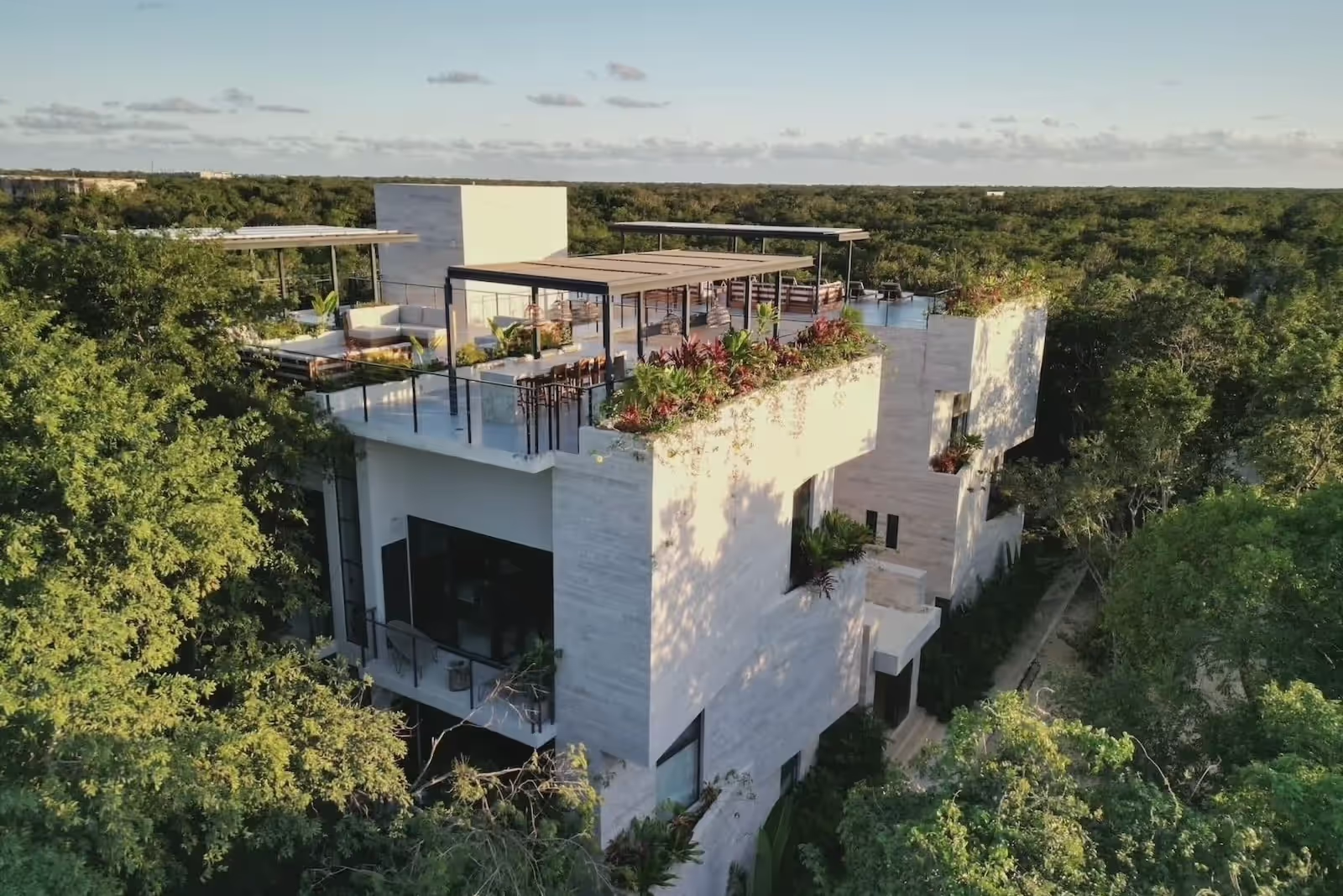
Tulum is no longer an undiscovered beach town where almost any new condominium could be presented as a high-return opportunity. It has developed into an established international destination with a large real estate inventory, new transportation infrastructure and a much more competitive rental market.
That does not mean the opportunity has disappeared. It means the Tulum real estate market has matured.
Today, the strongest properties are generally those that make sense beyond a promotional brochure: well located, properly built, efficient to maintain, comfortable for longer stays and sufficiently differentiated from the large number of generic units already available.
This guide examines what is currently shaping the market, where the risks are and what buyers should evaluate before purchasing. For a location-by-location analysis, see our guide to the top areas to invest in Tulum.
Understanding the Tulum Real Estate Market
There is no single Tulum property market.
A beachfront villa, a compact condominium in La Veleta, a larger residence near Holistika and a parcel of undeveloped land outside the urban center represent very different investments. They have different infrastructure, operating costs, tenant profiles and potential resale markets.
The market includes:
- Condominiums intended primarily for vacation rental
- Larger residences suitable for full-time or seasonal living
- Luxury villas in beach and jungle locations
- Development land in areas with varying levels of infrastructure
The distinction matters because buyers can no longer depend only on destination-level growth. The performance of a property increasingly depends on its immediate surroundings, legal status, construction quality, layout, management and ability to appeal to more than one type of occupant.
What Is Driving Demand for Real Estate in Tulum?
Tourism remains important, but growth is not uniform
Tourism continues to support Tulum’s economy and its residential rental market. However, current data show a more nuanced picture than the uninterrupted growth story frequently used in real estate advertising.
During the first quarter of 2026, the Mexican Caribbean received approximately 5.25 million tourists, an increase of 0.3% from the same period in 2025. In Tulum, hotel occupancy averaged 69.9% between January and May 2026. At the same time, passenger movement at Tulum International Airport declined by approximately 31.6% year over year during those five months.
These figures show that demand can fluctuate and that neither an airport nor a famous destination guarantees the performance of an individual property.
For buyers, the practical conclusion is clear: rental projections should be based on conservative assumptions, realistic operating expenses and the performance of genuinely comparable properties.
Improved regional connectivity
Tulum International Airport began operations on December 1, 2023, while its first regular international flights arrived on March 28, 2024. It has made direct travel more convenient for visitors from several cities in Mexico, the United States and Canada.
The Tren Maya has also connected Tulum with other destinations across the Yucatán Peninsula.
Together, these projects have improved Tulum’s long-term accessibility. However, infrastructure should be viewed as a supporting factor rather than a guarantee of appreciation. The property itself must still offer a competitive location, reliable services and a convincing reason for someone to rent, live in or eventually purchase it.
Demand beyond short vacations
Tulum is not used exclusively as a vacation destination. It also attracts seasonal residents, remote workers, entrepreneurs, retirees and people relocating from other parts of Mexico or abroad.
This creates potential for medium- and long-term rentals, particularly for properties that provide functional kitchens and storage, comfortable workspaces, reliable high-speed internet, good natural light and ventilation, larger living areas, convenient access to supermarkets, restaurants and daily services.
A compact unit designed only for short stays may struggle to serve this broader market. A thoughtfully planned residence can adapt more easily when tourism patterns change.

Choosing the Right Type of Property
Condominiums
Condos remain the most accessible and common property type in Tulum. Condos can work for personal use, vacation rentals or longer stays, but buyers should evaluate much more than the purchase price. For a detailed checklist of layouts, construction quality, amenities and operating costs to review when buying property in Tulum, see our complete condo buyer’s guide.
However, buyers should examine more than the unit itself. Important questions include:
- What does the HOA fee cover?
- Is there an adequate reserve for future repairs?
- Who maintains the pools, landscaping and shared equipment?
- Is parking included?
- Are electricity and water systems sufficient for the number of units?
- Does the apartment have enough space for real residential use?
A lower purchase price does not necessarily mean better value if the development has high operating costs, weak construction or dozens of nearly identical rental units.
Villas
Villas can command higher nightly rates and provide greater privacy, making them attractive to families and groups.
They also involve substantially more management. Pools, gardens, exterior finishes, water systems, security and housekeeping can create significant recurring expenses. Insurance and preventive maintenance are particularly important in a tropical climate.
A villa should therefore be evaluated on its net operating potential after staffing, utilities, repairs, management commissions and seasonal vacancies, and not only on its highest advertised nightly rate.
Land
Land may offer long-term appreciation or development potential, but it requires the most extensive due diligence.
Before purchasing, buyers should verify title, zoning, road access, environmental restrictions, construction parameters and the availability of electricity, water and wastewater solutions. A low price per square meter can become expensive when infrastructure and permitting costs are included.
Our guide on how to buy property in Mexico explains the wider legal process for both Mexican and foreign buyers.
What Buyers Should Prioritize in 2026
1. A location that works in daily life
Distance to the beach is only one consideration.
Access to supermarkets, restaurants, medical services, major roads and established neighborhoods can be more important for residents and longer-term tenants. Buyers should also visit the property at different times of day and evaluate road conditions, construction activity, noise and lighting.
2. Construction designed for Tulum’s climate
Humidity, heavy rain, intense sun and year-round air-conditioning use place considerable stress on buildings.
Waterproofing, drainage, window quality, ventilation, electrical capacity and material selection can directly affect future costs. Buyers should inspect specifications rather than relying on renderings.
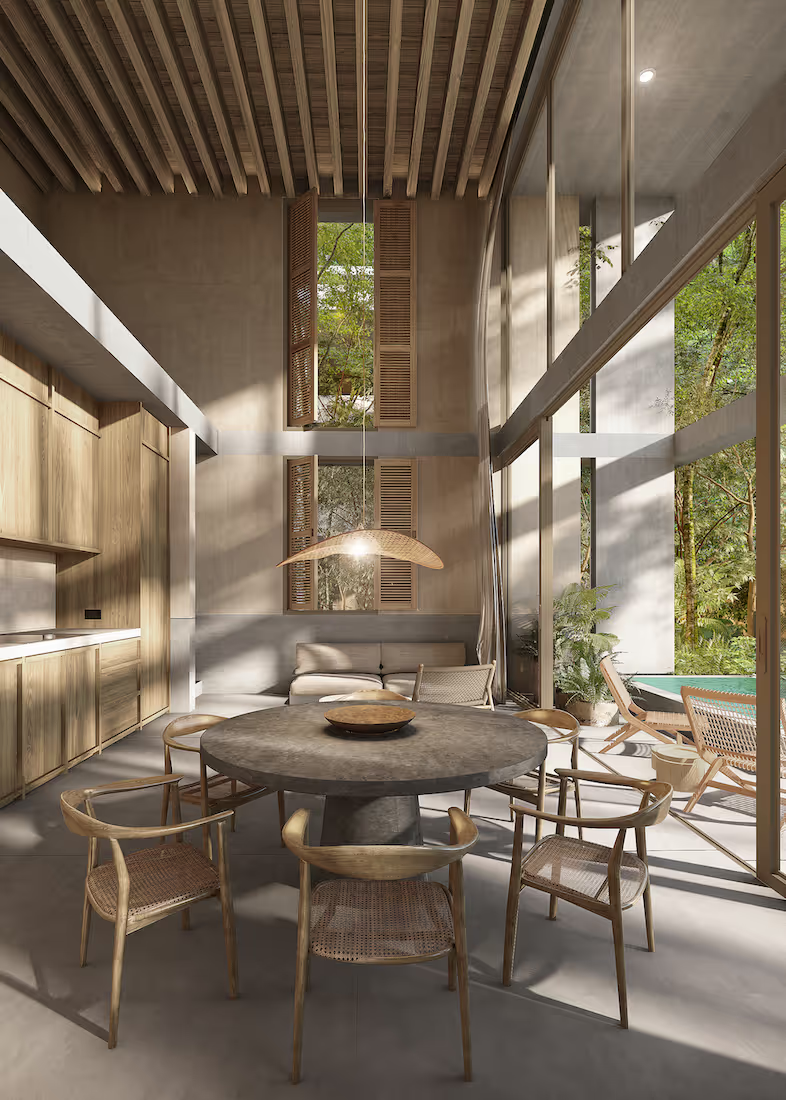
Well-designed overhangs, mosquito screens, cross-ventilation and shaded exterior spaces are not merely aesthetic features. They improve comfort and can reduce energy use.
3. Reliable water, energy and wastewater systems
Infrastructure is one of the most important and frequently overlooked differences between developments.
Buyers should determine:
- How water is supplied, filtered and stored
- How wastewater is treated
- Whether electrical backup is available
- Whether common areas depend entirely on the public grid
- Who is responsible for maintaining these systems
- How their operation is reflected in the HOA budget
These systems are less visually exciting than an infinity pool, but they can have a greater effect on daily life and long-term property value.
4. Density and privacy
Two developments may occupy similarly sized parcels while offering very different experiences.
Lower density can provide more privacy, better natural ventilation, additional landscaping and less pressure on amenities. It may also help a property stand apart from projects where many apartments share the same pool, corridors and common areas.

5. Realistic ownership expenses
A rental forecast should include more than expected income.
Buyers should account for:
- HOA fees
- Property management
- Booking-platform commissions
- Electricity and internet
- Cleaning and linen replacement
- Insurance
- Property tax
- Repairs and preventive maintenance
- Accounting and tax obligations
A property producing a high gross income can still offer a weak net return if it is expensive to operate.
6. Developer experience and delivery history
In a presale purchase, the developer’s record can be as important as the property design.
Review previous completed projects, construction quality, delivery history, legal documentation and how the developer manages warranty issues. Ask who owns the land, whether permits are in place and how buyer payments are linked to construction progress.
Short-Term or Long-Term Rental?
Short-term rentals may produce higher revenue per occupied night, particularly during holidays and peak travel periods. They also require more active pricing, marketing, cleaning and guest management.
Long-term and medium-term rentals generally produce lower monthly gross revenue but can offer:
- Fewer vacancies between guests
- Lower cleaning and platform costs
- More predictable cash flow
- Less intensive daily management
- Reduced exposure to tourism seasonality
Some owners use a hybrid strategy, accepting short reservations during peak periods and offering monthly stays during quieter months. Whether this works depends on the unit, location, condominium rules and target guest.
For a detailed comparison, see our guide to short-term vs. long-term rentals in Tulum.
A Real Operating Example: 525 Tulum
At our completed development, 525 Tulum, internal operating results for its studios reached approximately 74% occupancy in 2023, 2024 and 2025. The corresponding net returns were approximately 10% in 2023, 7.5% in 2024 and 6% in 2025.
These results should not be interpreted as a guaranteed return for another property. They show what was possible in a specific development with functional studios, established rental operations, a rooftop infinity pool, private green areas and ongoing maintenance.
The gradual reduction in return between the 3 years also illustrates an important reality: even a well-performing property is affected by increasing competition, pricing pressure and operating expenses.
The objective should not be to find a property with the most optimistic projection. It should be to find one capable of remaining attractive under more conservative market conditions.
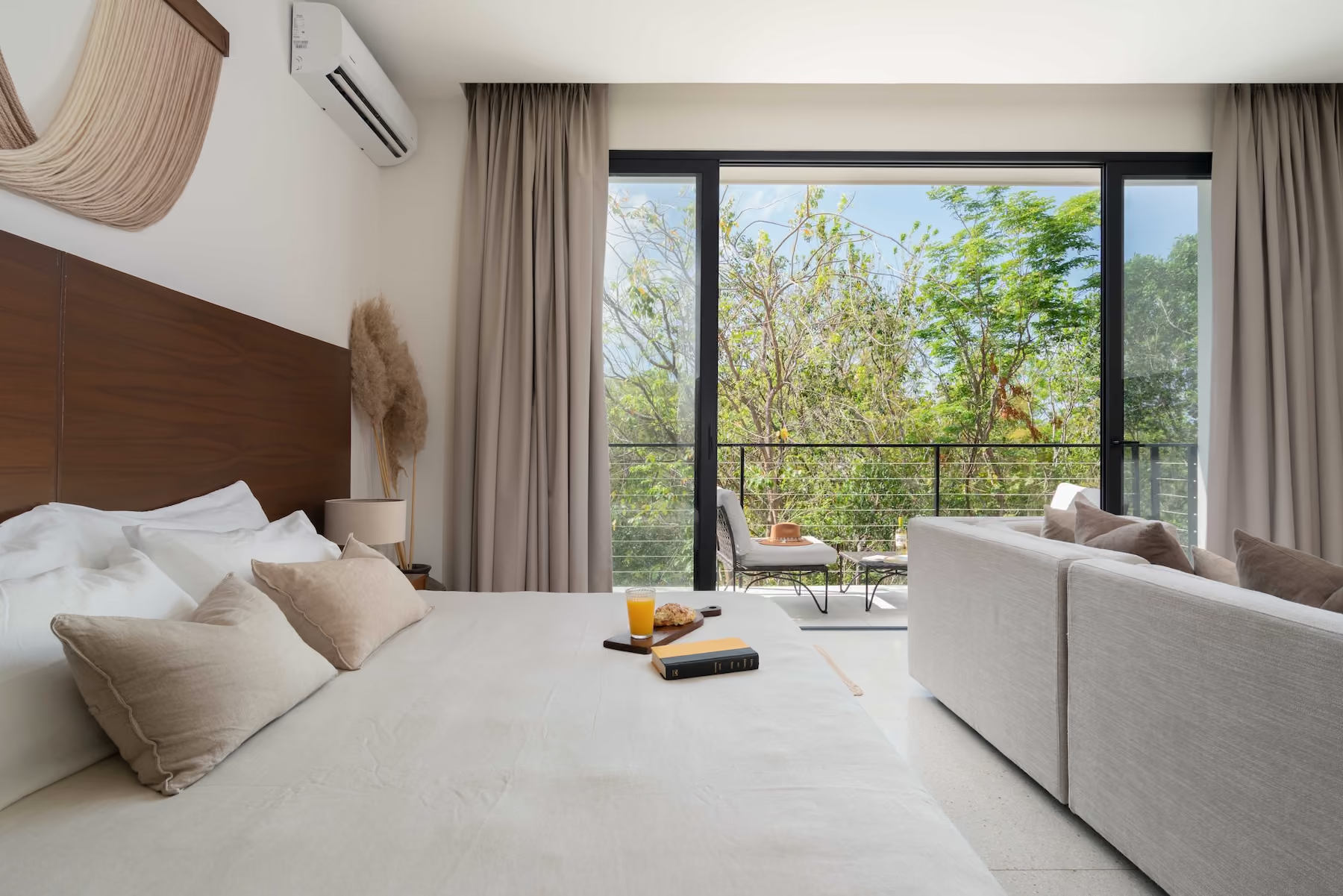

Sustainability Must Be Measurable
“Sustainable” is widely used in Tulum marketing, but buyers should look for specific systems and design decisions.
Meaningful sustainability features can include:
- Preservation of existing vegetation
- Natural ventilation
- Solar energy
- Energy-efficient appliances
- Wastewater treatment
- Water filtration
- Locally appropriate materials
- Low-density site planning
These features can reduce environmental impact, improve comfort and, in some cases, lower operating expenses. Their value depends on whether they are properly designed, installed and maintained.
If these ideas appeal to you, we invite you to review our development Mayab Tulum, which is planned as 32 premium residences on a 1-hectare site, preserving approximately 6,000 m2 of green areas. Its infrastructure includes solar energy for common areas, wastewater treatment, high-efficiency appliances and an on-site maintenance and rental-management team.
Is the Tulum Real Estate Market Still Worth Considering?
Yes, but not for the same reasons commonly promoted several years ago.
Tulum is no longer a market where buyers should assume that every presale will appreciate rapidly or that every vacation rental will remain highly occupied. Supply has increased, tourism fluctuates and renters have more choices.
The opportunity now lies in being selective. A strong property should offer:
- A location with real long-term usefulness
- Clear legal documentation
- Reliable construction and infrastructure
- Manageable ownership expenses
- A layout suitable for more than one rental strategy
- A credible developer or seller
- Features that distinguish it from competing inventory
Buyers seeking rapid speculative gains may find the current market challenging. Buyers seeking a combination of personal use, long-term ownership and realistic rental potential can still find compelling opportunities.
For a deeper examination of essential steps and legal structure, read our complete Tulum real estate investment guide.
And for buyers looking for spacious residences, low-density planning and measurable environmental features, explore our condos for sale in Tulum at Mayab Tulum. The development combines 1 and 2-bedroom layouts with preserved jungle, energy-efficient infrastructure and architecture designed by Elías Rizo.