.svg)

Tulum is no longer a simple “buy it and rent it” market. Over the last few years, the city has grown quickly: more apartments, more rental listings, more international residents and a more demanding renter profile. The opportunity is still here, but the market has matured. Today, the properties that perform best are the ones that offer real comfort, reliable services, thoughtful design and a clear rental strategy.
For anyone searching for long-term rentals in Tulum Mexico, this means there are more options than before, but also more differences in quality. Some people are looking for a quiet studio for remote work, others want a comfortable base for a few months in the Riviera Maya, and others are comparing neighborhoods before deciding where to live longer term. You can also explore our spacious residences at 525 Tulum, designed for comfortable extended stays.
For owners and buyers, the question is strategic: should a property be rented short-term to vacation travelers, or offered as a long-term rental for digital nomads, expats and residents?
Short-term rentals can still generate strong income in high season, but they come with more competition, higher management effort and more seasonal variation. Long-term rentals usually offer lower peak income, but they can provide steadier cash flow, fewer operational problems and a more predictable investment model.
In this article, we compare both strategies realistically, based on how the Tulum rental market works today.
Short-Term Rentals in Tulum
Short-term rentals are usually offered by the night or by the week, through platforms such as Airbnb and Booking.com.
A well-designed apartment with good photography, a strong location, reliable internet, air conditioning and access to amenities can still perform well. However, the market is no longer as easy as it once was. Tulum has a large supply of vacation rentals and guests are more price-sensitive than before.
Recent market data shows that Tulum’s short-term rental market has matured and become more competitive. AirDNA tracks around 11,486 active short-term rental listings in Tulum across Airbnb, Vrbo, and Booking.com, while average annual revenue per listing is down compared with the previous year.
Benefits of Short-Term Rentals
Higher income potential in peak season.
December through March can still be strong months, especially for properties with good design, strong reviews and easy access to Tulum’s main attractions.
Flexibility for personal use.
Owners can block dates for themselves and rent the property when they are not using it.
Better upside for unique properties.
Units with private pools, rooftops, jungle views, strong interiors or resort-style amenities can stand out more easily than basic apartments.

Challenges of Short-Term Rentals
More management.
Short-term rentals require guest communication, check-ins, cleaning, maintenance, restocking, reviews and fast problem-solving. Many owners hire a property manager, often around 20–30% of rental income.
Seasonality.
High season and low season can feel like two different markets. Summer and fall can bring lower occupancy, price reductions and more competition.
Higher operating costs.
Electricity, cleaning coordination, repairs, linens, platform fees and guest wear-and-tear can reduce the final net income.
More regulation and tax obligations.
Short-term rental owners in Quintana Roo should pay attention to lodging tax, platform rules and registration requirements. Quintana Roo’s lodging tax framework includes digital platforms and Airbnb states that guests booking in Quintana Roo pay a 6% lodging tax on the listing price, including cleaning fees. These taxes are generally collected and retained directly by the rental platforms. For more details about rental income taxation in Mexico, we recommend visiting our FAQ page.
Long-Term Rentals in Tulum
Long-term rentals are usually rented for six months or one year. This market is supported by digital nomads, remote workers, expats, retirees, local professionals and people who want to live in Tulum without buying immediately.
For many investors, long term rentals in Tulum, Mexico are becoming more attractive because they are simpler to operate. Instead of constantly searching for new guests, managing turnovers and adjusting nightly rates, the owner receives a more predictable monthly rent.
Benefits of Long-Term Rentals
More stable cash flow.
A good tenant can provide consistent income for months at a time, reducing the uncertainty of low season.
Less operational stress.
There are fewer check-ins, fewer cleanings, fewer guest messages and fewer small daily issues.
Lower management fees.
Long-term rental management is usually less expensive than vacation rental management, often closer to 8–10% depending on the service.
Better fit for remote workers.
Many long-term tenants care about practical lifestyle details: reliable internet, a proper workspace, parking, gym access, quiet surroundings and proximity to supermarkets, cafés, and wellness spaces.
Challenges of Long-Term Rentals
Lower upside during peak season.
A long-term tenant pays a fixed monthly rent, so you do not benefit from high nightly rates during Christmas, New Year or Easter travel periods.
Tenant selection matters.
A bad tenant can create delays, damage, or payment problems. Contracts, deposits and clear house rules are important.
Less flexibility for owner use.
Once the unit is rented for several months, the owner cannot easily use it for personal vacations.
Pricing must be realistic.
Tulum has many furnished apartments available. A unit that is priced too high may stay vacant, especially outside high season.

Market Reality: Both Strategies Can Work, But Not for Every Property
The best strategy depends on the type of property.
A compact studio with good furniture and reliable internet may work well for long-term tenants. A larger apartment with a private pool, strong design, and resort-style amenities may perform better as a short-term rental. A property in a quiet but connected area may attract remote workers, while a property close to the beach road may attract more vacation guests.
A short-term rental can outperform a long-term rental if the unit is well located, professionally managed, and achieves strong occupancy in high season. But if occupancy drops, nightly rates fall, or operating costs increase, the net result may be similar to a long-term rental - with more work.
A long-term rental may not look as exciting on paper, but it can be more stable and easier to manage, especially for owners who live outside Mexico.
The Hybrid Strategy
A hybrid strategy combines both models.
For example, an owner may rent the property short-term during high season and then offer it as a monthly rental during the slower months. This can work well in Tulum because many visitors come for one to three months during winter, while others look for lower monthly prices during summer and fall.
The challenge is timing. If you wait too long to secure a long-term tenant after high season, you may face vacancy. A hybrid strategy works best when the property manager plans ahead and understands both vacation rental pricing and monthly rental demand.
Which Strategy Is Best?
Choose short-term rentals if you want higher income potential, are comfortable with seasonality and have a strong property manager.
Choose long-term rentals if you prefer stable income, lower management effort and fewer moving parts.
Choose a hybrid strategy if you want flexibility and are willing to manage the calendar carefully.
For many investors today, the smartest approach is to underwrite the property based on long-term rental income first. Then, if short-term rental performance is strong, you can treat that additional income as upside rather than depending on it from the beginning.

Final Thoughts
Tulum is still an attractive real estate market, but investors should be realistic. The rental market has matured. Competition is stronger, guests are more selective, and the best-performing properties are usually the ones with strong design, reliable services, good management, and a clear rental strategy.
Long term rentals in Tulum Mexico can be a smart option for owners who want stability and less operational stress. Short-term rentals can still work, especially for unique and well-managed properties, but they should be analyzed carefully and conservatively.
The best investment is not just the unit with the highest projected return. It is the property that can perform well in real market conditions — through high season, low season, and everything in between.
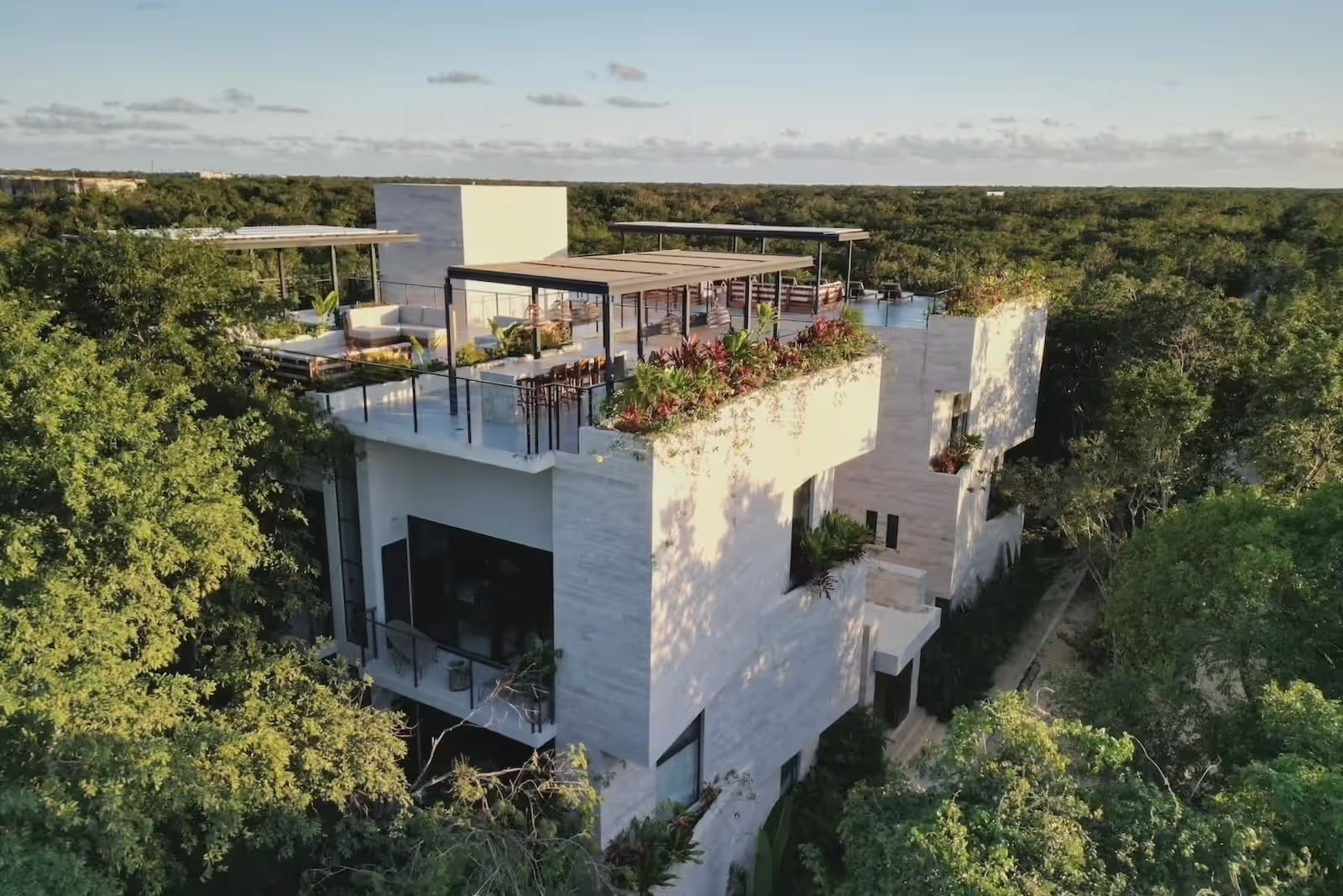
Interested in owning a property designed for both lifestyle and rental potential? Explore Mayab Tulum, a low-density residential development with 38 residences on a hectare land, surrounded by preserved jungle, with spacious residences, amenities and on-site rental management support.